
The word 'Resources' in green textured font on a beige background.

This page is intended to provide resources for topics related to native plants and wildlife habitat development. I will be developing this page over the winter. Some topics I want to include are listed below. Your participation in developing these resources is much appreciated. Send me an email!

  • Local successes - pictures and details of native plants in yards, riparian areas, etc.

  • Local contacts for native plants, landscaping, etc.

  • Conservation agencies and groups, including local projects

  • Rewilding efforts across the nation

  • Landscaping with native plants - hedgerows, meadows, pesticide drift hedges, backyards

  • Landscape fabric and alternatives

  • Natural weed control

  • Pesticides and herbicides

  • Why seed source is important

  • Assisted migration and planting with climate change in mind

  • Native medicinal plants

  • Native food plants

  • Details and spotlight on local wildlife and what habitat they need

  • Other sources to purchase native plants locally and in the Pacific Northwest

NOTE: The images below were taken from “Rewilding - 5 things every wildlife garden needs” by Shaun McCoshum, June 16, 2026.
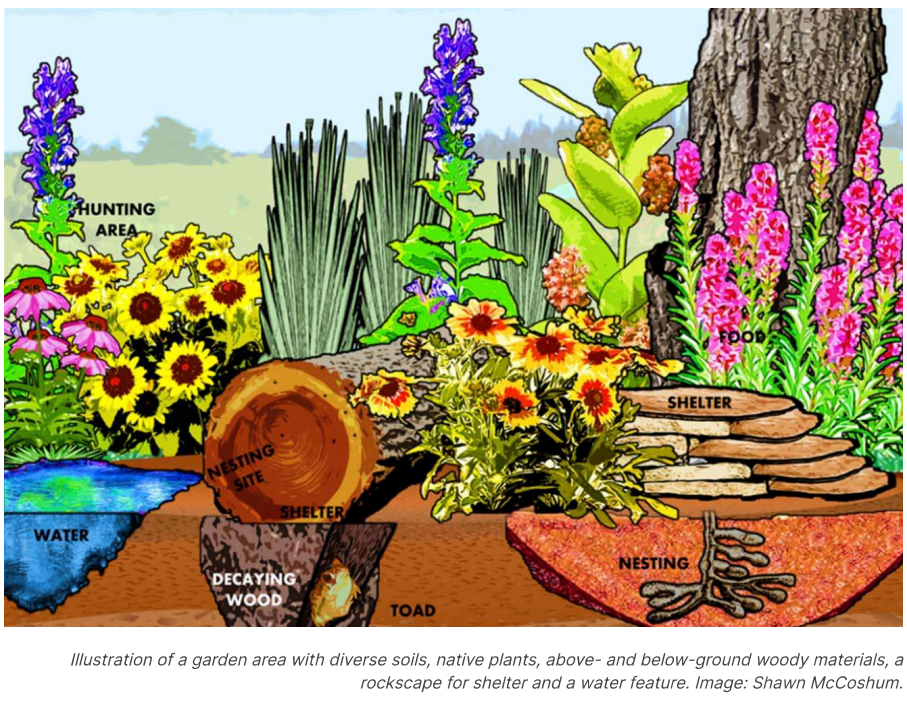
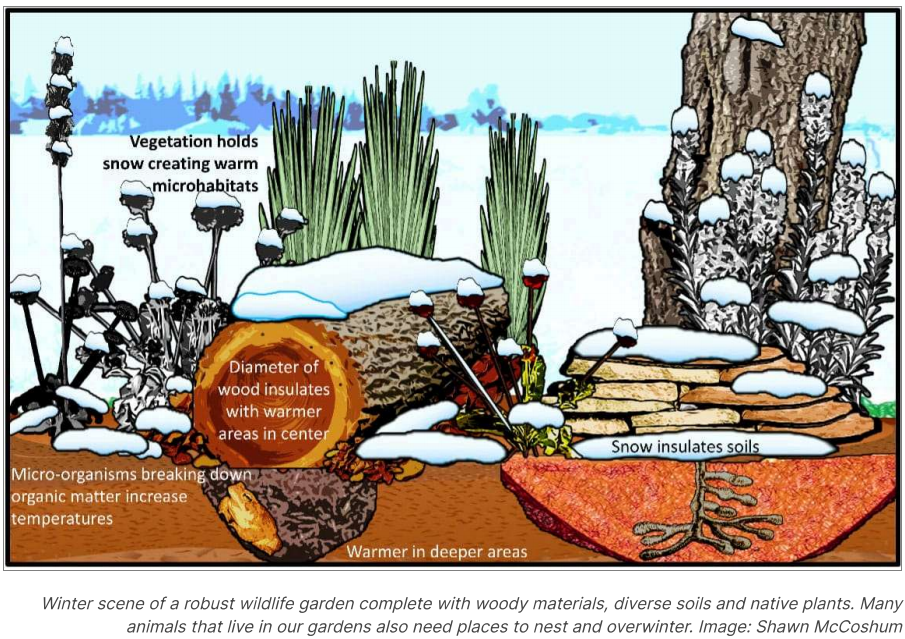
Illustration of a garden area with diverse soils, native plants, above- and below-ground woody materials, a water feature, a large tree with labeled shelter and food areas, a fallen log with nesting site and decaying wood, various flowering plants, and a rockscape for shelter and nesting.
Diagram showing a winter scene of a wildlife garden with woody materials, diverse soils, and native plants. The diagram highlights how vegetation holds snow, creating a warm microhabitat, and explains how wood insulates soil, with microorganisms breaking down organic matter to increase temperatures, supporting animals and plants.