 Image 1 of 4
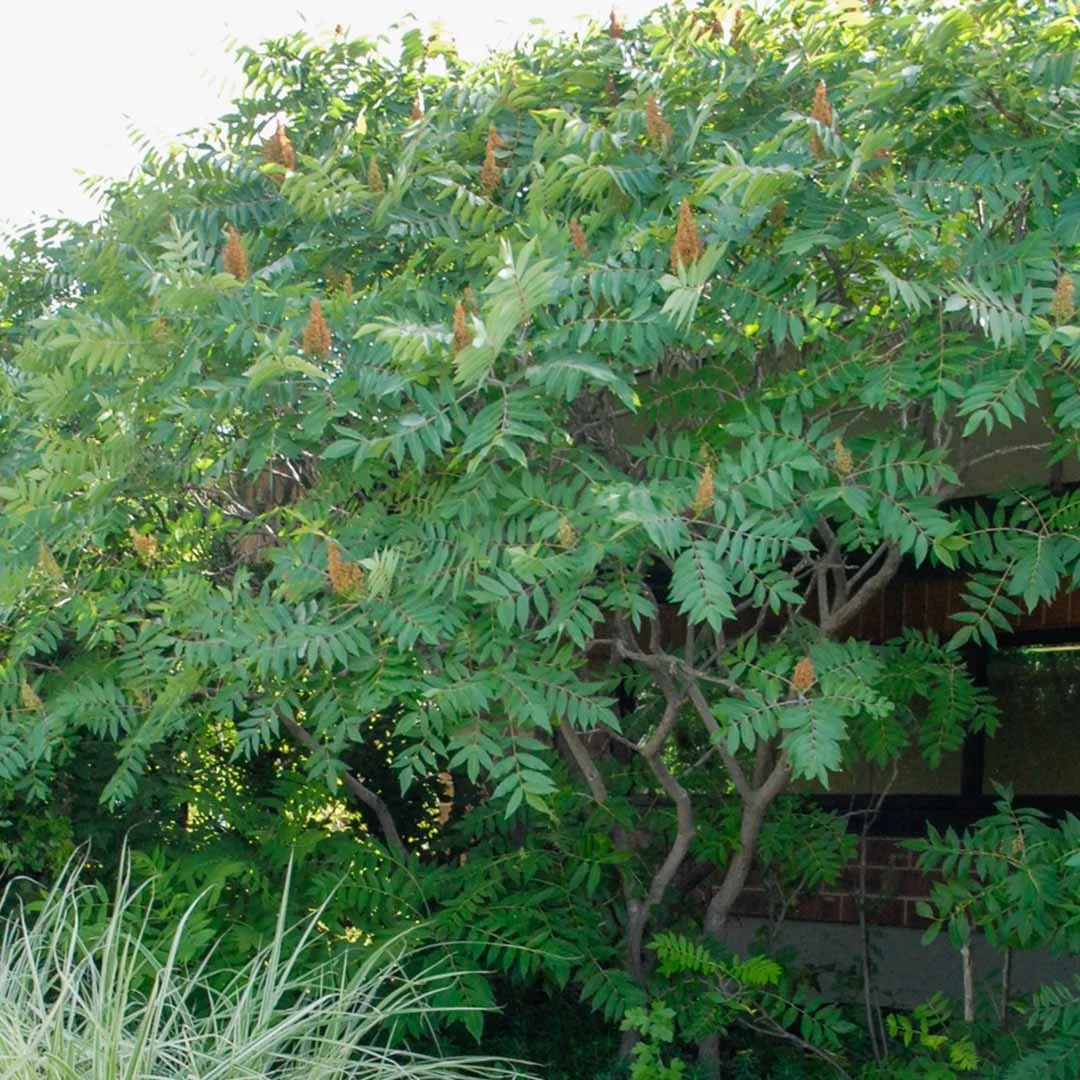 Image 2 of 4
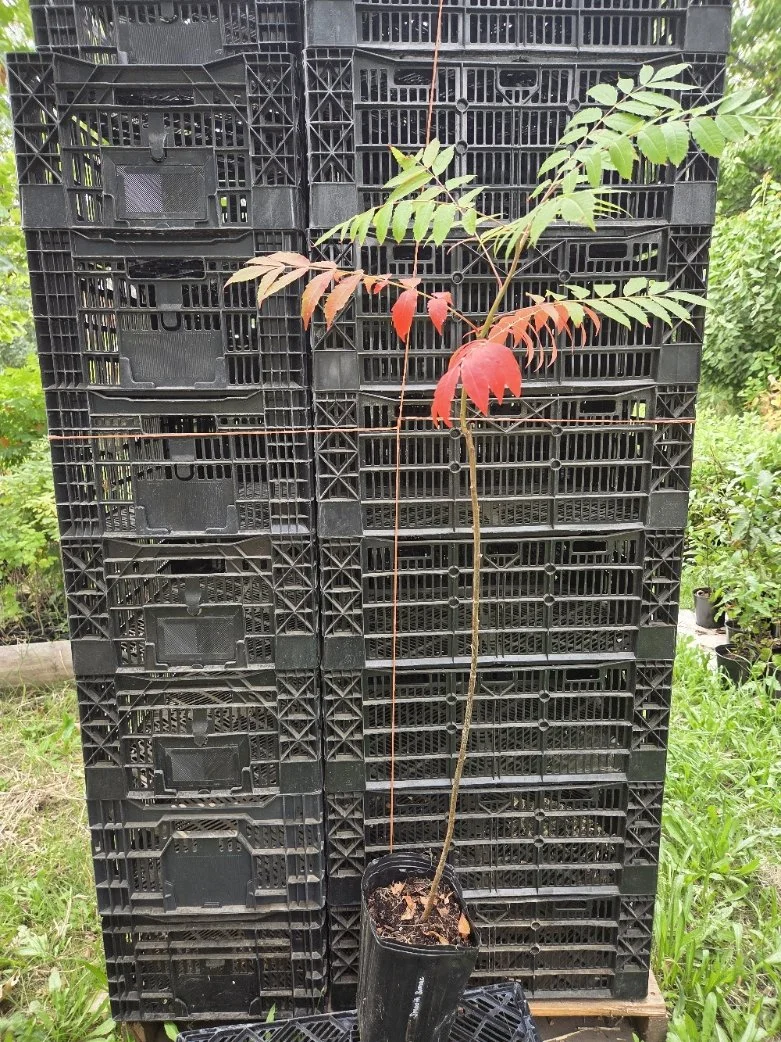 Image 3 of 4
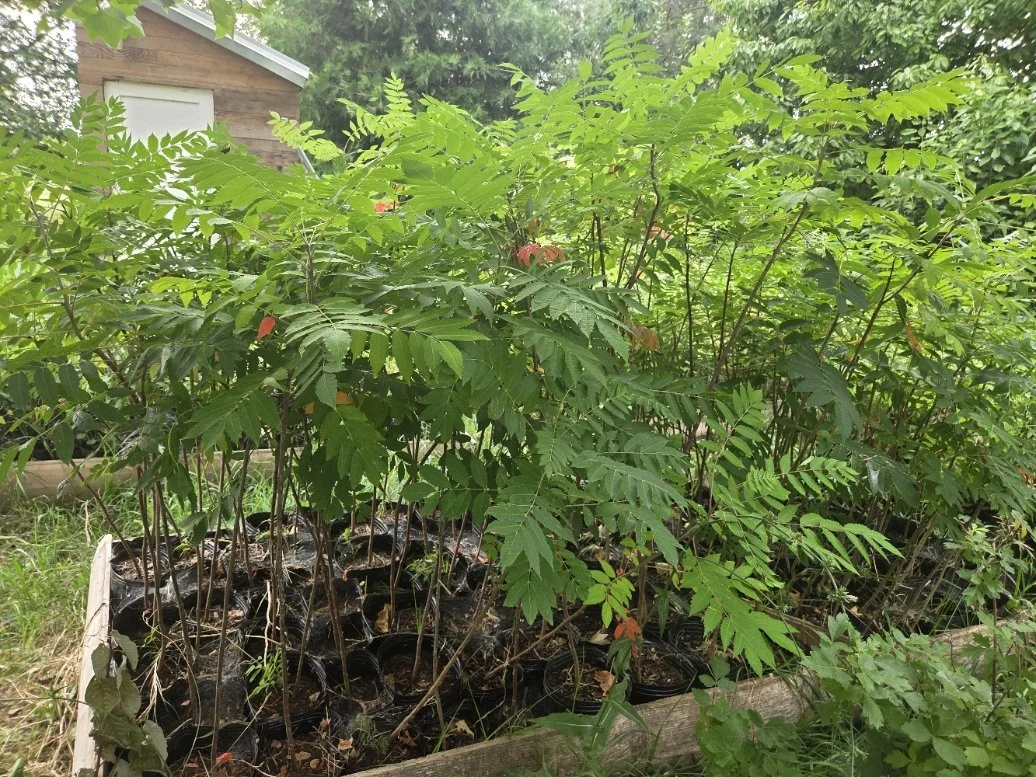 Image 4 of 4
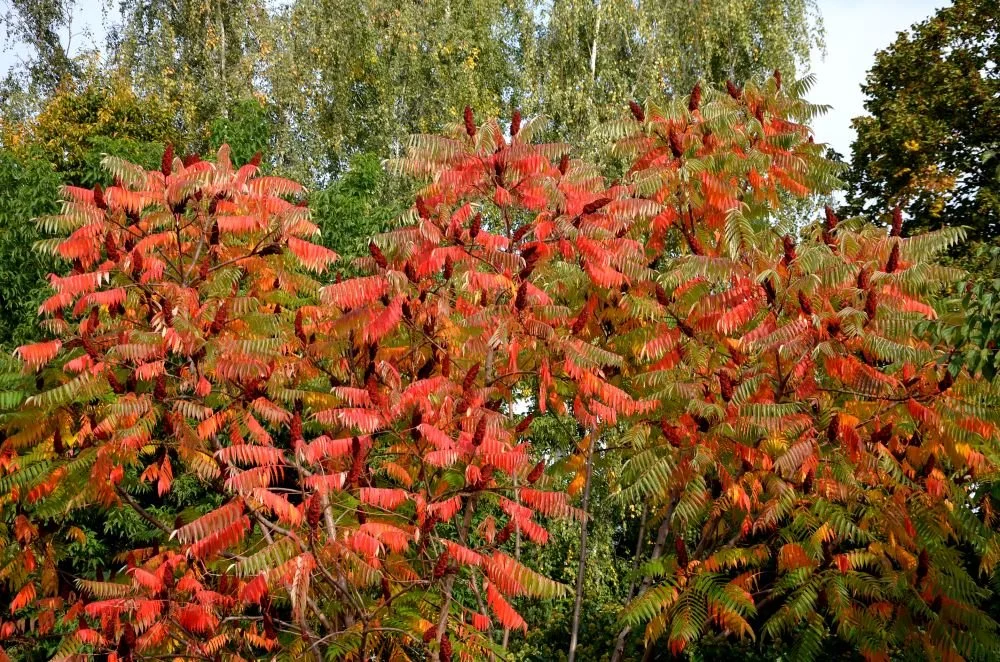
This fast growing wildlife shrub grows to 10-20 feet with short, crooked, leaning trunks. The fall display of the mass of red orange leaves and seed spikes is breathtaking. It will spread into a thicket over time. These shrubs are dioecious, meaning each shrub has either male or female flowers. Male shrubs have pollen producing flowers but only the female shrubs produce the fruit/seed clusters. Note that I cannot tell which is which; if you want to ensure you have the fruits it is best to buy several plants
Smooth sumac has high ecological value. A wide variety of beneficial insects are attracted to its male flowers for pollen and to females flowers for their nectar. It is a host plant for several butterfly and moth species, and their flowers and leaves support many beneficial predatory insects (which will control garden pests). The leaves provide food for many pollinators whose caterpillars feed primarily on sumacs. The fruit clusters are red, fuzzy drupes and provide food for a wide array of birds. The wide growth habit provides excellent cover for birds and small mammals. Note that while this plant is young it can be confused with the invasive Tree of Heaven.
The plants I am offering this year (and I have several hundred in the field for next spring) are vigorous and large, in large 12-inch-deep treepots of various sizes. Plant size is the same regardless of treepot size.